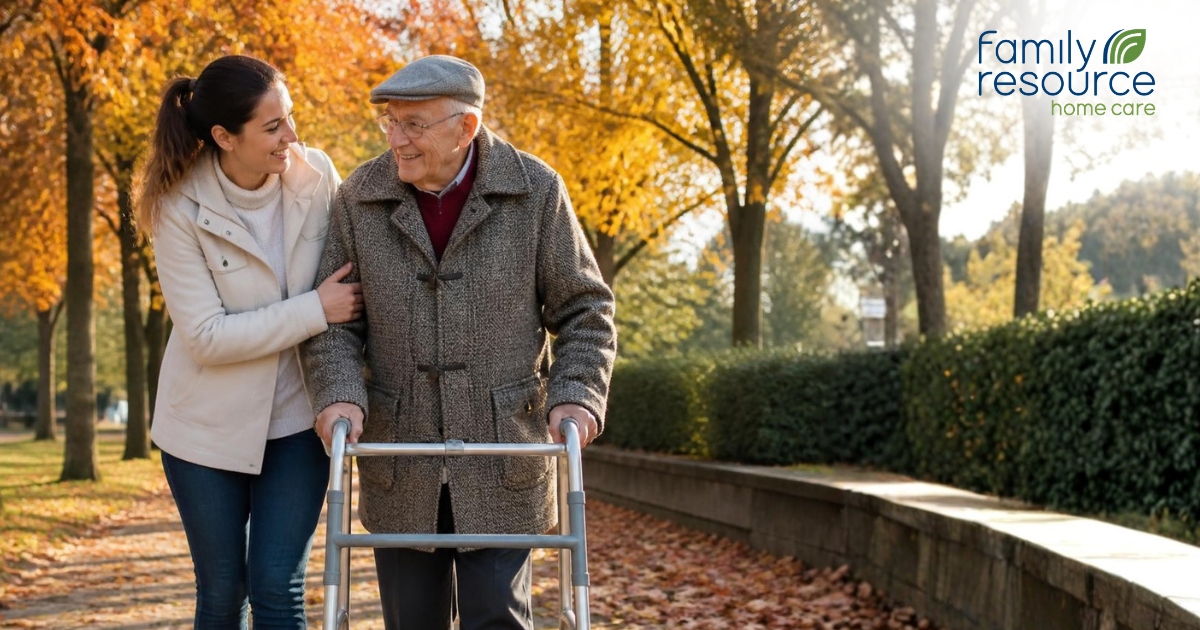
As summer comes to an end and fall begins, changes in weather, daylight, and daily routines can create new safety considerations for older adults. Shorter days, wet weather, falling leaves, cooler temperatures, and changing wardrobes are all reminders that a little preparation can go a long way. For seniors who want to remain independent at home, taking a few simple steps before the season changes can help create a safer and more comfortable environment.
At Family Resource Home Care, our caregivers can also provide a helping hand with many everyday tasks, from keeping walkways clear and changing seasonal clothing to helping with errands and making sure the home is comfortable as the weather changes. Here are some fall safety tips for seniors.
1. Make Sure Your Home Is Well Lit
One of the biggest changes that comes with fall is the amount of daylight. The sun begins setting earlier, and mornings can stay darker for longer. This can make it more difficult to see obstacles, stairs, uneven surfaces, and other potential hazards.
Take some time to check the lighting throughout your home.
Fall lighting checklist:
- Make sure indoor light bulbs are working.
- Replace burned-out bulbs promptly.
- Keep hallways, stairways, and entryways well lit.
- Use nightlights in bedrooms, bathrooms, and hallways.
- Check that outdoor lights are functioning properly.
- Make sure pathways to entrances are illuminated.
- Keep light switches easy to reach.
It’s also helpful to plan outdoor activities and appointments with the changing daylight in mind. If possible, schedule walks, errands, and other activities earlier in the day when visibility is better.
How our caregivers can help: Caregivers can help identify areas where additional lighting may be useful, replace accessible light bulbs, and assist with errands or activities so clients don’t have to navigate outside alone in the dark.
2. Keep Falling Leaves and Walkways Under Control
Beautiful fall leaves can quickly become a safety concern when they collect on sidewalks, driveways, porches, and stairs. Wet leaves can become especially slippery and may hide uneven surfaces or other obstacles.
Help reduce the risk of slips by:
- Keeping walkways and steps clear of leaves.
- Sweeping or removing wet leaves regularly.
- Watching your step when walking outdoors.
- Using handrails on stairs.
- Wearing shoes with good traction and a secure fit.
- Taking extra care on wet or uneven surfaces.
Don’t forget about indoor entryways, too. Wet leaves, rain, and mud can easily be tracked inside and create slippery floors.
How caregivers can help: Light housekeeping can include helping keep frequently used areas tidy and clear of clutter, while caregivers can also assist clients with clearing fallen leaves from walkways to ensure safety.
3. Switch Out Your Seasonal Clothing
As temperatures begin to drop, it’s a good time to put away summer clothing and bring fall and winter items back into rotation.
Having appropriate clothing readily available can help seniors stay warm and comfortable as temperatures fluctuate.
When changing out a wardrobe:
- Move sweaters, jackets, long pants, and warmer layers into easy-to-reach areas.
- Store summer clothing in a clean, organized location.
- Check clothing for damage before putting it away or wearing it again.
- Make sure shoes and boots are comfortable and have good traction.
- Keep coats, hats, gloves, and other cold-weather accessories accessible.
- Consider organizing outfits so frequently worn items are easy to find.
Avoid placing heavy storage containers or frequently used clothing in difficult-to-reach locations. Reaching overhead or climbing on chairs and stools can create an unnecessary fall risk.
How caregivers can help: Caregivers can assist with laundry, organizing closets and drawers, moving seasonal clothing into rotation, and putting away summer items so clients have appropriate clothing available as the weather changes.
4. Be Careful on Wet and Slippery Surfaces
Fall often brings rain, morning dew, and increasingly damp conditions. Outdoor surfaces can become slick, particularly porches, ramps, stairs, sidewalks, and driveways.
Before heading outside:
- Check the weather conditions.
- Wear shoes with good traction.
- Take smaller, steady steps on slippery surfaces.
- Use handrails when available.
- Avoid rushing.
- Be especially cautious when surfaces are wet.
Inside the home, place wet shoes and umbrellas in designated areas to prevent water from creating slippery floors.
How caregivers can help: Caregivers can provide mobility assistance, help clients safely navigate their homes and communities, and assist with keeping commonly used areas clean and dry.
5. Prepare for Cooler Temperatures
Fall temperatures can change quickly, particularly in the morning and evening. Seniors may be more sensitive to cold temperatures, making it important to keep the home and wardrobe prepared for cooler weather.
Before the temperatures drop:
- Check that heating systems are working properly.
- Make sure vents aren’t blocked by furniture or clutter.
- Keep blankets and warm clothing easily accessible.
- Close windows when temperatures become cold.
- Pay attention to weather forecasts when planning outings.
- Dress in layers when going outside.
If your home uses space heaters, fireplaces, or other supplemental heating, follow the manufacturer’s safety instructions and keep flammable materials away from heat sources.
How our caregivers can help: Caregivers can help clients prepare for colder days, pick up household necessities, and make sure commonly used areas remain comfortable and organized.
6. Take Extra Care With Mobility
Changes in weather and daylight can make getting around more challenging. Seniors who use canes, walkers, or other mobility equipment should make sure their equipment is ready for the season.
Check that:
- Mobility devices are in good condition.
- Walker or cane tips aren’t excessively worn.
- Pathways throughout the home remain clear.
- Stairs and entryways are well lit.
- Frequently used items are within easy reach.
It’s also important not to rush when moving from one room to another or getting in and out of vehicles.
How our caregivers can help: Our caregivers can provide mobility assistance and offer support during everyday activities, helping clients move safely through their homes and when participating in errands or appointments.
7. Keep Outdoor Areas Safe
Fall is a good time to take a look around the outside of the home and address potential hazards before colder weather arrives.
Check for:
- Uneven sidewalks
- Loose railings
- Clutter on walkways
- Leaves covering steps
- Garden hoses left outside
- Poorly lit entrances
- Wet or slippery surfaces
Keeping frequently used outdoor areas maintained can make it easier to safely enter and leave the home.
How caregivers can help: Caregivers can help with light household tasks and identify everyday obstacles that may make navigating the home more difficult. For larger repairs or maintenance concerns, families should arrange for an appropriate professional.
8. Plan Errands and Activities Around the Weather
Fall weather can be unpredictable. Rain, cooler temperatures, and earlier sunsets may make some activities more challenging than they were during the summer.
When possible, plan errands, walks, appointments, and social activities around daylight and weather conditions.
It can also be helpful to:
- Check the forecast before leaving home.
- Allow extra time so there’s no need to rush.
- Dress appropriately for the temperature.
- Carry a phone when going out.
- Let someone know your plans when appropriate.
- Consider alternative plans when conditions are unsafe.
How caregivers can help: Caregivers can provide transportation to appointments, grocery stores, pharmacies, and other destinations, making it easier for seniors to stay active and connected even as the seasons change.
9. Keep Emergency Items Easy to Find
Fall is also a good opportunity to make sure important items are accessible in case something unexpected happens.
Keep frequently needed items in convenient locations, including:
- Cell phones and chargers
- Flashlights
- Emergency contact information
- Medications
- Important household phone numbers
- Extra blankets
- Weather-appropriate supplies
Avoid putting emergency supplies somewhere difficult to reach.
Families can also check in with older loved ones to make sure they know who to contact if they need assistance.
How caregivers can help: Caregivers can help clients stay organized and ensure commonly used items are kept in accessible locations.
10. Don’t Forget About Staying Social
Fall safety isn’t only about preventing physical accidents. As days become shorter and colder, some seniors may spend more time at home and become less socially active.
Staying connected can be an important part of maintaining overall well-being.
Consider making plans to:
- Visit friends and family.
- Participate in community activities.
- Enjoy hobbies indoors.
- Take walks when weather permits.
- Schedule regular phone or video calls.
- Attend appointments and social events.
How caregivers can help: Companion care can provide meaningful social interaction through conversation, games, hobbies, walks, and other activities that help seniors stay engaged and connected.
A Little Preparation Can Make Fall More Enjoyable
Fall brings plenty to look forward to, from changing leaves and cooler temperatures to family gatherings and seasonal traditions. Preparing the home and daily routines ahead of time can help seniors enjoy the season while reducing common safety concerns. Simple steps like improving lighting, clearing leaves, organizing seasonal clothing, checking mobility equipment, and planning activities around daylight can make a meaningful difference.
And when an extra hand is helpful, Family Resource Home Care caregivers can assist with many everyday tasks that support safety and independence at home. From light housekeeping and personal care to transportation, mobility assistance, companionship, and seasonal organization, care can be tailored to each person’s needs. The goal isn’t to take away independence. It’s to provide the right support so seniors can continue doing the things they enjoy, in the place they love, throughout every season. Family Resource Home Care is here to help seniors and their families navigate changing care needs with compassionate, personalized support.
Ready to prepare for a safer fall? Contact Family Resource Home Care today to schedule your free in-home assessment and learn how personalized home care can support you or your loved one at home. Call us now at (800) 775-6380!
We are the resource. We are here to Improve More Lives.